
[page_toc]
A vending system back then was fairly simple—the weight of a coin opened a latch that dispensed small items. Gumball machines wowed customers with a bright-coloured gumball rolling down a spiral loop. At the time, this was already groundbreaking.
However, as technology and life in general evolve, vending machines must remain practical and usable amidst the waves of innovation.
A modern vending system is optimised for the digital age of banking and transactions. Vending machines have evolved from currency and note counters to more secure verification methods and seamless use.
Our guide outlines the key differences between a smart vending system and a traditional vending system. By the end of this guide, you’ll see why a smart vending machine is the more scalable option for your business.
Key Takeaways
- IoT Connectivity: The core differentiator is Internet of Things (IoT) integration, which transforms reactive traditional machines into proactive smart systems that communicate status and inventory in real time
- Data-Driven Inventory: Real-time visibility through cloud dashboards eliminates manual auditing and allows for predictive replenishment, ensuring machines are always stocked with the right items.
- Advanced Hardware Verification: Unlike traditional coils that merely rotate, smart systems use laser drop counters and weight sensors to verify a successful dispense and prevent stuck item failures.
Smart Vending System vs. Traditional Vending System: An Overview
The differences between a smart vending system and a traditional vending system are best summarised with the chart below:
| Smart Vending System | Traditional Vending System | |
| Internet of Things | Has IoT connectivity, allowing it to report on stock and inform operators on potential repairs | Components operate within a closed circuit.
No data transfer occurs with systems, components, and devices outside of the vending machine |
| Inventory Management | Integrates with an inventory management system to reflect stock count and machine usage in real time. | Route drivers and machine operators must visit each machine to take inventory. |
| Hardware | In addition to coils, smart vending machines rely on RFID tracking, weight-based inventory tracking, and drop counters to ensure successful dispenses. | Traditional vending machines are limited to coil-based dispensing. |
| User-facing Features | Smart vending systems utilise a touch-screen, providing a dynamic interface for users. | Traditional vending machines use buttons that users must press to process a transaction.
These buttons allow employees to enter codes corresponding to the item they want to retrieve. |
| Maintenance Involved | Smart vending machines provide real-time health updates.
Machine operators won’t have to routinely visit each vending machine to diagnose it. |
Traditional vending machines require regular, physical monitoring. Problems and jams won’t be detected otherwise. |
| Restocking Process | Smart vending machines give real-time updates on their stock count.
Machine operators know exactly which SKU needs to be resupplied. |
Traditional vending machines must be visited regularly to check inventory levels. |
What is Traditional Vending
In its most fundamental form, a traditional vending system is a stand-alone, mechanical retail unit that exchanges physical currency for goods.
It operates as a closed loop, meaning it has no way to communicate with the outside world. All logic is contained within its internal circuit board, which is programmed to trigger a motor (usually a rotating coil) once it confirms the correct amount of cash or coins has been inserted.
Because these machines rely on mechanical sensors, they are prone to instances of products getting stuck.
Furthermore, transactions are integral to the operation of traditional vending machines, which are primarily used to sell items without store management staff. More modern vending machines, on the other hand, can be used for office and industrial purposes outside of retail-based vending.
What is a Smart Vending System
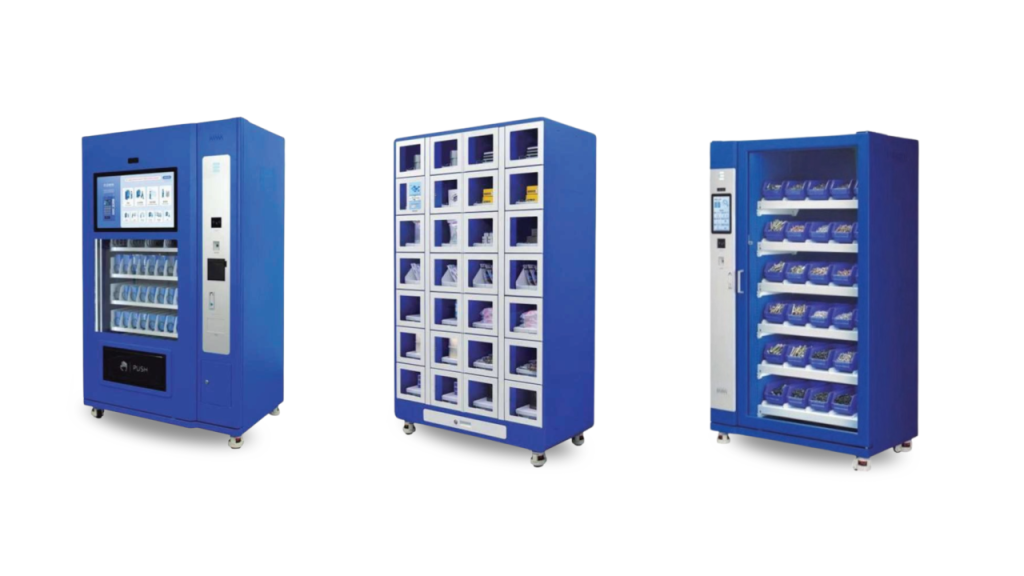
A smart vending system is an IoT-driven inventory solution that transforms a standard dispenser into a cloud-connected “retail robot” or automated storeroom.
Unlike traditional machines that operate in isolation, smart systems utilise platforms like Vision One’s OpFlex and Vision Store Manager to provide real-time visibility into:
- Stock levels
- Employee consumption patterns
- Maintenance and repair needs
By integrating directly with a company’s inventory management system, these machines eliminate manual inventory checks and enable automated replenishment alerts, ensuring critical supplies are always available without human intervention.
Smart vending systems are also more advanced in other areas, including dispensing, the hardware they use and run on, and user-facing features, among others.
The rest of this guide will detail how smart vending machines differ from traditional vending machines.
Key Differences Between a Smart Vending System and Traditional Vending
The most identifying distinctions between smart vending systems and traditional vending systems are the following:
Internet of Things
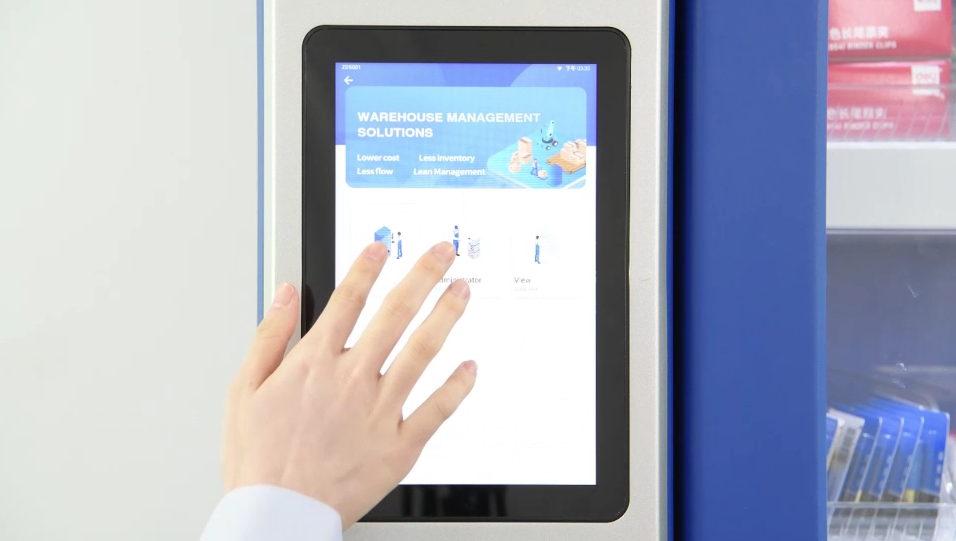
One of the most determining differences between smart vending machines and traditional ones is their Internet of Things (IoT) connectivity.
The brain of a traditional machine is purely reactive and local. It lacks internet connectivity (IoT), meaning it cannot report its status to the owner. If the machine runs out of a popular item, malfunctions, or is tampered with, the operator remains unaware until they visit the location in person.
The smart vending machine, on the other hand, connects to an inventory management system to provide real-time visibility into stock levels and inventory history. This means they can be managed remotely, and the operator would only need to visit them for restocking and repairs.
Inventory Management
In traditional vending, the operator has no way to know stock levels until a technician physically visits the machine.
When a route driver arrives, they must perform a manual count and record data in paper logs or on handheld devices, a process that is highly susceptible to human error and provides no real-time oversight for the vending machine manager.
Smart vending systems, by comparison, utilise IoT-enabled real-time tracking to provide constant visibility into every item on every shelf. Through a cloud-based dashboard, operators can monitor live stock levels across an entire fleet of machines simultaneously. This data is directly integrated with the operator’s inventory management system.
Instead of reactive visits, the system uses predictive analytics to send automated replenishment alerts when an item hits a specific threshold. The restocker knows exactly what to bring for a refill before leaving the stockroom, reducing transportation costs (if applicable) and ensuring that machines are always stocked with the right products at the right time.
Hardware
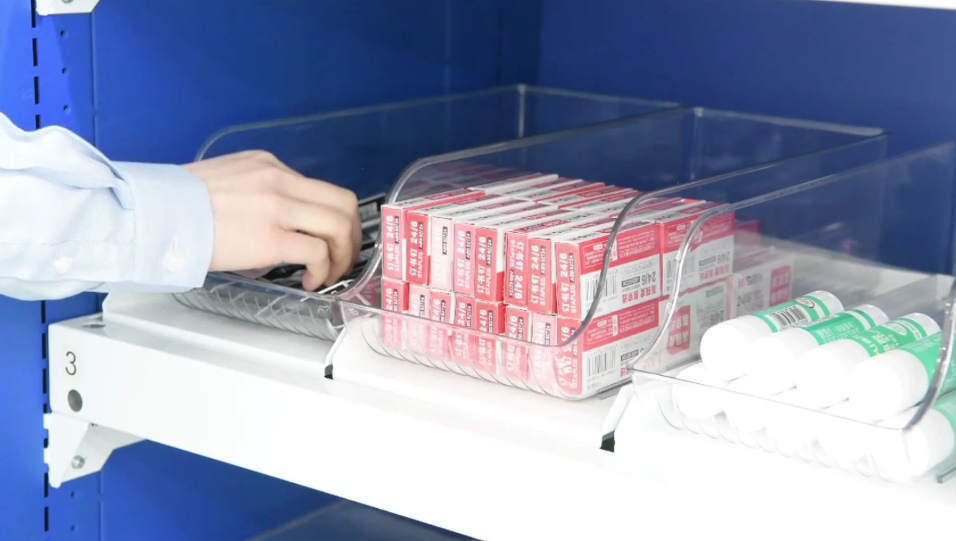
Traditional vending hardware is defined by its mechanical simplicity and lack of external communication. These machines rely on electric motors to drive rotating coils or spirals.
While traditional machines simply assume a product has been dispensed if a coil turns, smart systems use weight sensors, laser drop counters, or computer vision to verify every transaction.
The hardware in these systems is significantly more advanced, offering specialised dispensing methods, including
- Weight sensors. These mechanisms detect the weight difference on each tray, allowing the machine to determine which item was removed and the quantity.
- Secure lockers. These mechanisms lock goods and wares behind compartmentalised lockers. Employees must verify their identity before these lockers can be opened.
In more secure environments, such as office settings, smart machines use RFID, PINs, or facial recognition to authenticate users.
Through these hardware innovations, product jams and maltransactions are prevented, ensuring employees get the items they require.
User-facing Features
The user-facing experience also differs between traditional and smart vending machines.
A traditional vending machine features a physical keypad and a small alphanumeric LED display (e.g., “Selection A1”). You enter a code and wait for the item to drop. Information is limited to whatever is printed on the product packaging visible through the glass.
Whereas smart vending machines replace buttons with touchscreens.
This allows users to browse a digital catalogue, view product information, and other product details. These displays also make for a more engaging user experience.
Maintenance Involved
Vending machines, whether smart or traditional, require maintenance. This ensures they operate properly throughout the day, dispensing goods and items as needed.
In traditional vending machines, technical issues often go undetected until a user reports a failure or a route driver notices a malfunction.
Because these machines lack internal diagnostics and connectivity, troubleshooting is manual. A technician must physically travel to the site just to diagnose the problem—whether it’s a jammed coin mech or a blown compressor—only to find they don’t have the necessary part in their van.
This results in extended downtime, multiple service trips, and lost revenue.
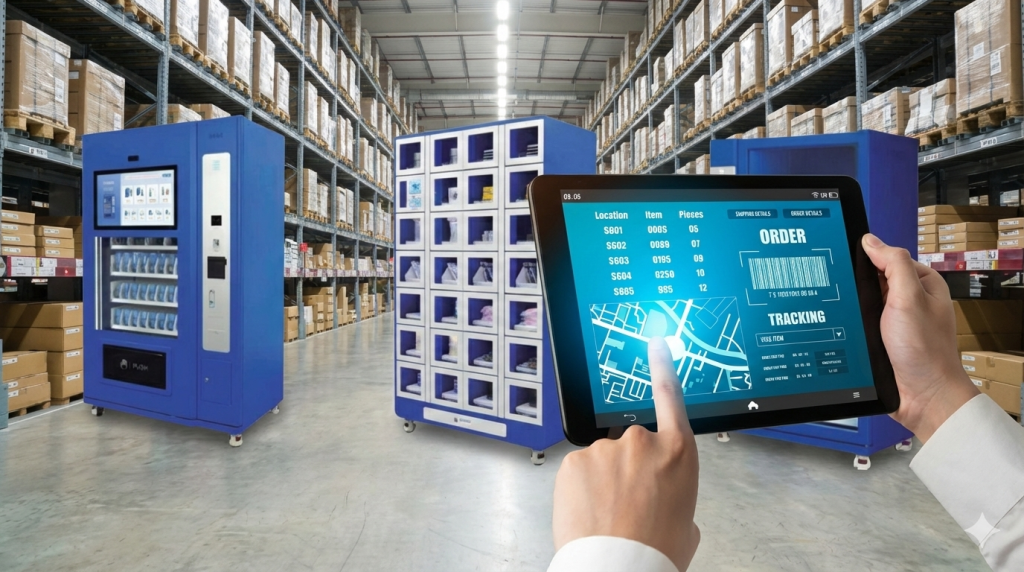
In contrast, smart vending systems monitor their own health.
They report data on motor torque, internal temperature, and sensor calibration to a central dashboard. If a cooling fan begins to vibrate excessively or a motor draws unusual current, the system can flag a potential failure before it happens, allowing for a preemptive repair.
Furthermore, many software-related issues can be resolved through remote reboots or cloud-pushed firmware updates, eliminating the need for a physical service call.
When a technician is required, they arrive with the exact part needed, as the machine has already self-diagnosed the error and communicated the specific fault code in advance.
Restocking Process
Restocking involves two parts:
- Taking inventory of existing stock in each machine
- The physical restocking of each machine based on what it’s missing
Since traditional machines cannot communicate their stock levels, route drivers must follow a fixed schedule, visiting every machine regardless of whether it is half-full or completely empty.
Upon arrival, the driver must open the machine, count the remaining items, and then return to their truck to retrieve the necessary stock. This inefficient back-and-forth results in higher labour costs and the constant risk of “stockouts,” where popular items sit empty for days because the driver wasn’t scheduled to visit until the following week.
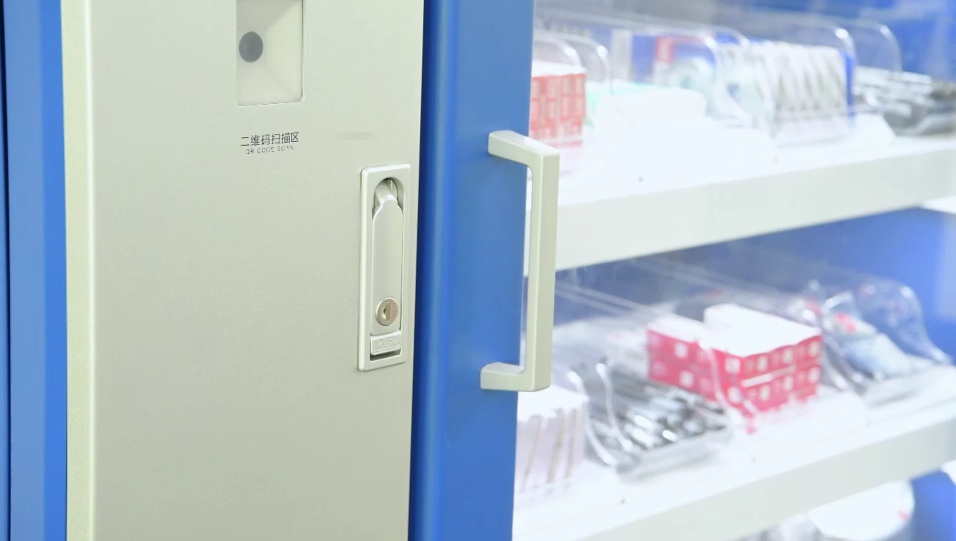
The process is more streamlined and instantaneous with smart vending machines.
Because the machine provides real-time inventory data to a central cloud dashboard, operators know exactly which items have sold out. Route drivers no longer need to physically visit each vending machine; the machines’ IoT connectivity provides this information in a centralised database and dashboard.
This allows staff to pack a precise kit for each machine in advance, ensuring the driver only carries exactly what is needed.
Furthermore, drivers are dispatched only to machines that require service. This data-driven approach significantly lowers fuel and vehicle maintenance costs by eliminating unnecessary trips.
For businesses, this results in a high ROI—often realised within two years—by cutting waste by up to 50% and providing 24/7 access to supplies without the overhead of a staffed tool crib or stockroom.
Benefits of a Smart Vending System Over Traditional Vending
Because of the advancements listed above, smart vending machines offer the following benefits for machine operators and businesses.
- Real-Time Oversight: Smart systems utilise IoT connectivity to provide operators with an instant, centralised view of stock levels and machine health across their entire fleet without the need for physical inspections.
- Reduced Labour Around Inventory Management and Restocking: The ability to pre-kit replenishment loads and optimise travel routes based on live inventory data enables staff to service only the machines that need attention, significantly reducing manual counting and unnecessary travel.
- More Efficient Workplace: By reducing time spent visiting machines and counting stock, and by providing 24/7 automated access to supplies, businesses run more efficient office operations.
Types of Smart Vending Machines
Smart vending machines can be categorised into the following types. They differ according to how they dispense goods and record stock levels.
Weight Sensor Machine
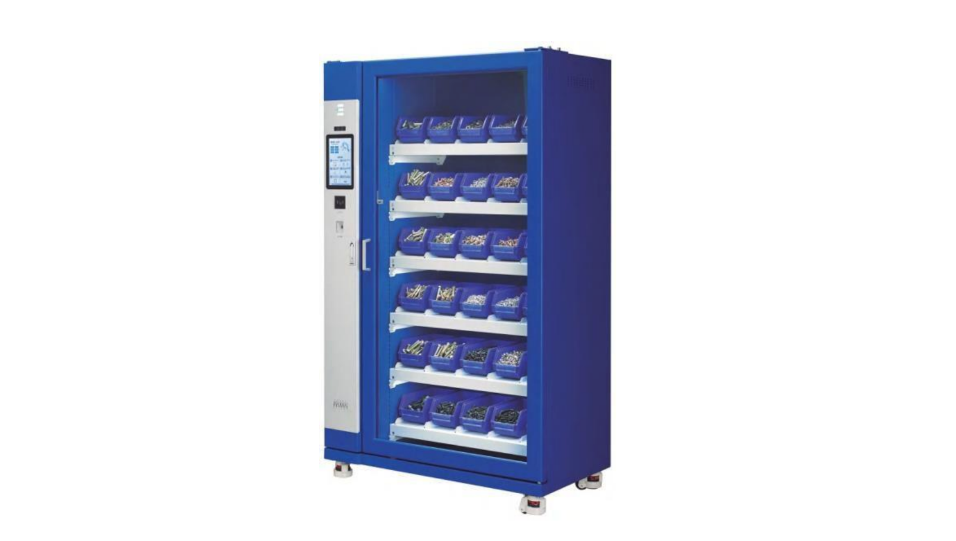
The Weight Sensor Machine represents the pinnacle of frictionless inventory.
Each shelf is equipped with high-precision load cells (strain-gauge sensors) that detect microchanges in weight. Unlike traditional systems that count drops, this machine calculates inventory based on the gravitational pull of the remaining stock.
- How it Works: When a user removes an item, the system instantly subtracts the weight difference and updates the cloud database. It can even distinguish among products on the same shelf when they have unique weights.
- Key Benefit: It enables “grab-and-go” convenience with 100% accuracy, eliminating the need for manual scanning or RFID tagging of individual low-cost items.
Locker Type Vending Machine
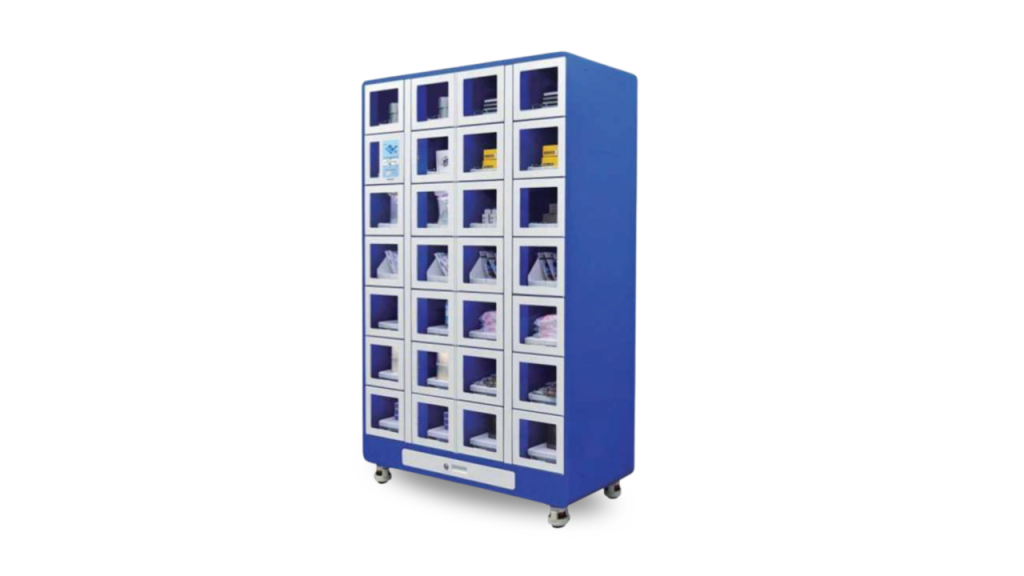
This machine provides secure, compartment-based storage and dispensing for items that are too large for coils and too valuable for open shelves.
Each locker is electronically controlled and records every time each locker is opened to track inventory and ensure accountability.
- How it Works: Users access the machine via RFID, PIN, or facial recognition. Once a selection is made, a specific door unlocks. Many modern lockers include internal charging ports, ensuring that power tools or tablets are fully charged when checked out.
- Key Features: It features individual electronic lockers with customizable dimensions and supports multiple authentication methods like biometric scans, QR codes, and RFID. It also integrates with ERP/WMS systems to provide detailed consumption reports.
Spiral/Coil Dispensing Vending Machine
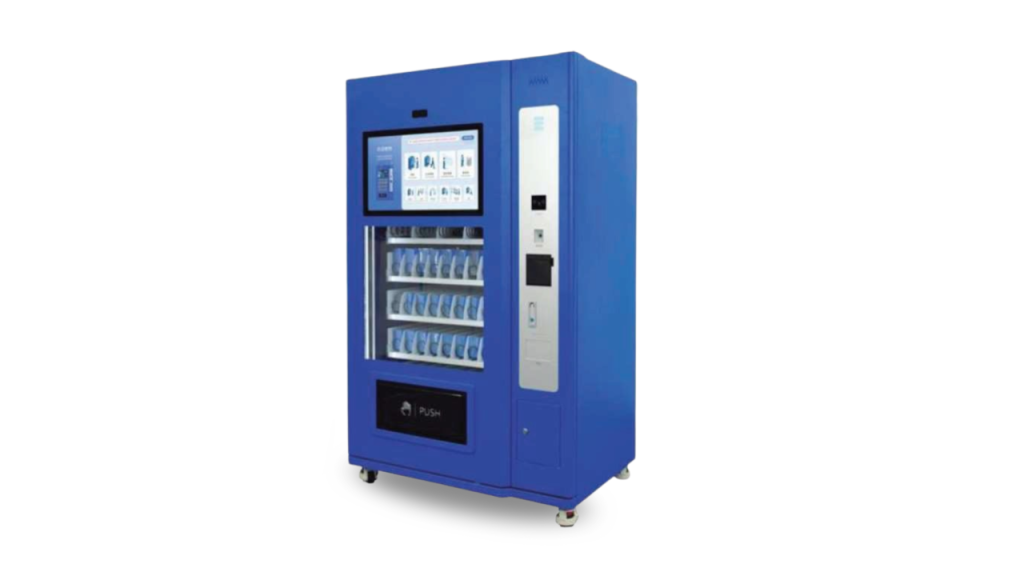
This is the smart evolution of the classic vending design.
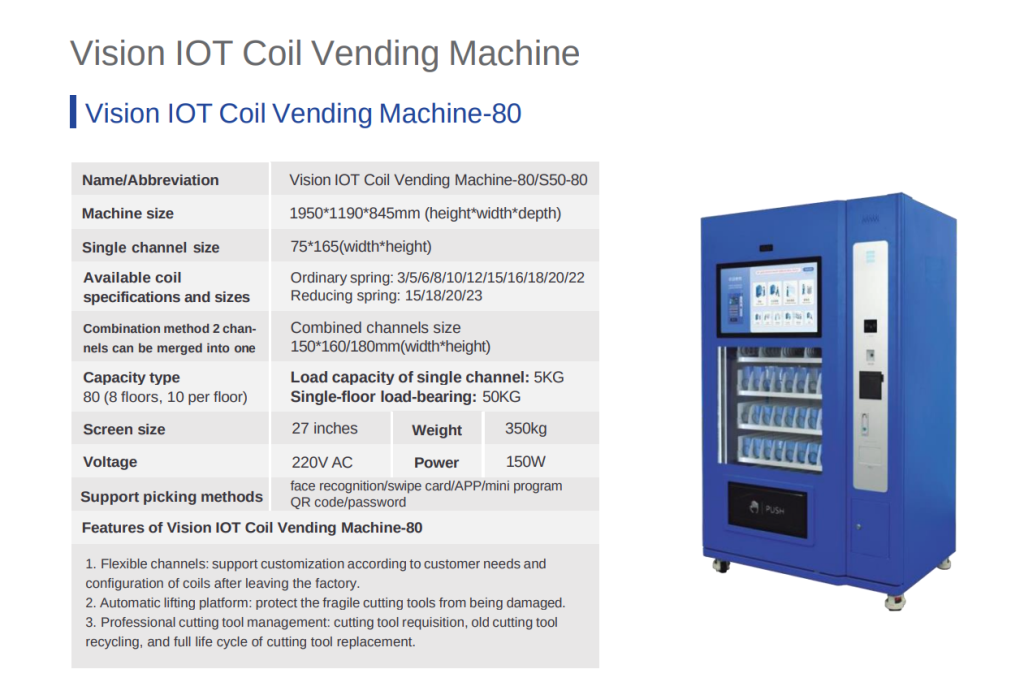
While it retains the familiar rotating coils, it also utilises IoT connectivity to record transactions. They also feature a touchscreen UI for enhanced user control.
- How it Works: Instead of simply turning the coil and assuming success, smart spiral machines use laser- or infrared-based drop counters. If the sensor doesn’t detect the product falling into the bin, the motor continues to rotate, or the system triggers an instant refund.
- Key Benefit: Its simplicity makes it a cost-efficient office or retail solution. However, it adds the necessary features to prevent product jams and offers the IoT convenience that smart vending machines provide.
Environments and Use Cases Where Smart Vending Systems are Ideal
Common use cases for smart vending machines include the following areas.
Workplace
In modern corporate offices, smart vending machines act as a pantry or stationery manager.
They are ideal for dispensing office supplies, such as keyboards, mice, and cables, or for dispensing meals in break rooms.
Because these machines integrate with employee RFID badges, companies can track department-specific spending and eliminate the shrinkage often associated with open supply closets.
Industrial
For manufacturing plants, aerospace hangars, and construction sites, smart vending is a critical tool for MRO (Maintenance, Repair, and Operations) management.
These systems are used to store specialised tools, PPE, and consumables such as drill bits and inserts.
By placing supplies closer to workers and requiring authentication (e.g., face recognition), industrial sites can reduce travel time to central storerooms. They also automate recording in an already busy environment.
Retail
In the retail sector, smart vending serves as a high-tech microshop in high-traffic areas like airports, malls, and train stations.
Retailers use them to sell a variety of goods, such as socks, ties, and more commonly, snacks and beverages, without the overhead of a physical shop or a human cashier.
The interactive touchscreens serve as digital billboards, enabling brands to run video ads when not in use.
Parlours and Entertainment Centres
In high-energy environments such as arcades, smart vending machines offer a seamless self-service option for purchasing everything from game credits and prize tokens to snacks.
These machines are ideal here because they handle high volumes of cashless transactions quickly, reducing queues at service counters.
They’re also ideal for large, high-traffic areas, such as theme parks. Placing vending machines around the park ensures convenient access to a range of beverages, especially in sweltering heat.
Get a Smart Vending System Today!
Transitioning to a smart vending system is a strategic investment in your business’s operational efficiency and long-term scalability.
By integrating IoT connectivity and real-time data analytics,d you move beyond the limitations of traditional blind operations toward a fully transparent, automated retail environment.
Take the first step toward smarter inventory control with Vision One. As a leading one-stop engineering and IoT solutions provider in Singapore, we offer tailored IoT solutions for your business, allowing you to operate more efficiently and effectively. Don’t let uncontrolled supply rooms and manual restocking drain your resources any longer.
Contact Vision One today to start your journey toward a more secure, efficient, and data-driven future.
Frequently Asked Questions
What happens if the smart vending machine loses its internet connection?
Most smart vending systems are equipped with offline backup capabilities, allowing them to continue certain local functions and store transaction data until the connection is restored.
Can I integrate the smart vending software with my company’s existing ERP or WMS?
Yes, smart vending platforms like Vision Store Manager integrate seamlessly with existing Enterprise Resource Planning (ERP) and Warehouse Management Systems (WMS) to enable unified inventory tracking.
Is it possible to customise the machine’s physical appearance to match our brand?
Yes, smart vending machines are highly customizable; you can add custom graphics to the machine’s body and advertise your brand or specific promotions on the interactive touchscreen.
Are there options for providing free or subsidised items to employees?
Using employee RFID badges or PINs, operators can set permissions, such as granting free monthly allocations to certain departments or offering subsidised pricing for staff.
Can one software interface manage multiple machines?
Yes, inventory management systems enable you to manage multiple machines from a single, unified cloud-based command centre.