
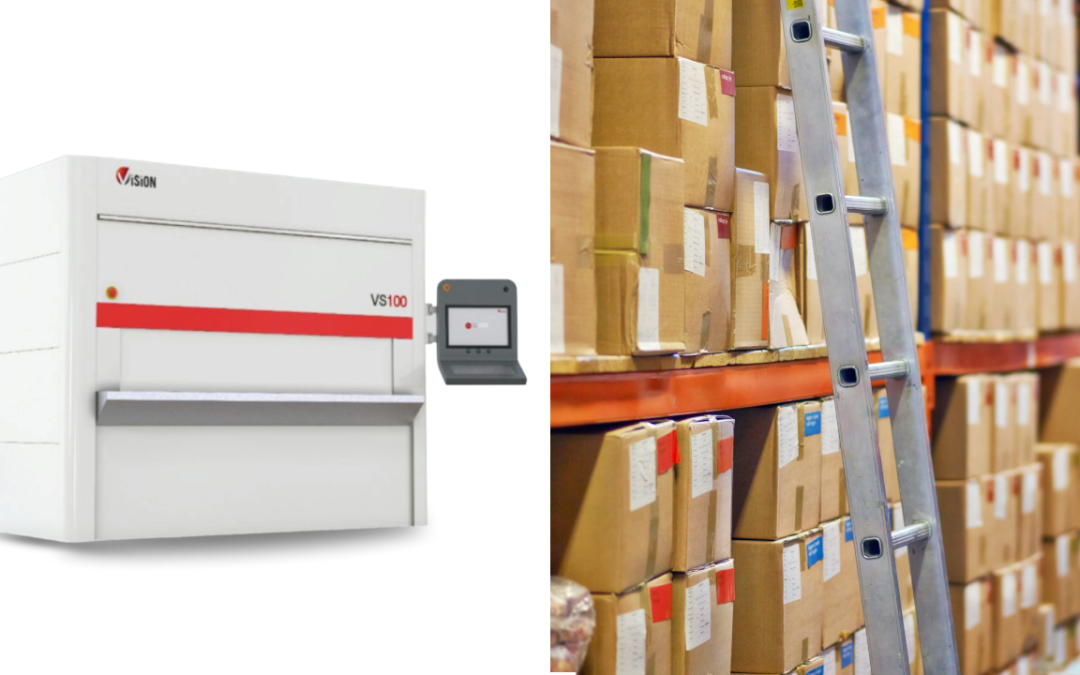
Traditional storage has been the backbone of industry for decades. However, the rise of the Internet of Things (IoT) and automation has introduced a new contender.
An automated storage system shifts the focus from wide, sprawling aisles to the ceiling. They aim to maximise a warehouse or facility’s vertical space, making space more efficient and utilised.
But how do these systems work, and which one is the right fit for your business?
This guide explores the fundamental differences between these technologies. We will examine how they operate, their impact on your footprint, and how modern IoT connectivity from providers like Vision One is making storage smarter than ever.
Key Takeaways
- Vertical storage systems maximise warehouse efficiency by shifting the focus from sprawling floor aisles to underutilised ceiling space.
- The Vertical Lift Module (VLM) uses an elevator-like extractor to retrieve independent trays, making it ideal for heavy or irregular loads.
- Vertical Carousel Storage (VCS) operates on a continuous loop like a Ferris wheel, providing a compact solution for high-frequency picking of uniform-weight items.
- Automated storage solutions from providers such as Vision One offer IoT connectivity to enhance real-time inventory tracking and a more integrated workflow for warehouse staff.
- While traditional static racking has a low entry cost, it is often inefficient due to wasted aisle space and the manual effort required for retrieval.
Vertical Lift Module vs. Vertical Carousel Storage vs. Traditional Storage System: How Are They Different?
| Vertical Lift Module | Vertical Carousel Storage | Traditional Storage System | |
| Mechanisms | Uses a central elevator to fetch individual trays. | All shelves are linked in a continuous loop and rotate simultaneously. | Entirely static with no moving parts; relies on external human effort |
| Footprint | Can reach up to 30 metres. | Compact but limited to about 7 metres in height, unless otherwise customised according to specifications | Requires sprawling aisles for people and machines, which results in a large amount of wasted floor space. |
| Internet connectivity | Smart and IoT-connected; integrates with management platforms for real-time data and inventory tracking. | Smart and IoT-connected; integrates with management platforms for real-time data and inventory tracking. | Shelves do not store data, and tracking relies on counting and manual data input. |
| Modularity | Modular in height; units can be extended upwards if a facility’s ceiling height increases. | Less flexible; height is generally fixed due to the mechanical limits of the continuous rotating chain | Somewhat modular; more racks can be added, but they always require additional floor space for aisles. |
| Workplace Safety | Delivers items to an ergonomic waist-high window and includes safety light curtains to stop motion if interrupted | Delivers items to an ergonomic waist-high window and includes safety light curtains to stop motion if interrupted | Requires workers to climb ladders, increasing the risk of injury. |
What is a Vertical Storage System?
A vertical storage system is an automated solution designed to store and retrieve items by using the vertical height of a building.
Instead of employees walking through aisles and climbing ladders, the machine brings the items to them.
At its core, a vertical storage system is a large, enclosed cabinet. It contains a series of trays or shelves. They rotate (e.g., carousel) or move up or down (e.g., lift) to bring the desired items to the warehouse operator.
These systems are managed by sophisticated software and computer controls. When an operator needs a specific part or product, they simply input the request into a touchscreen interface. The system then locates the item within the unit and brings the tray directly to an ergonomic access window.
These systems are part of a broader category known as Automated Storage and Retrieval Systems (ASRS). They are designed to eliminate wasted time from walking and searching, as well as optimise the warehouse’s space by eliminating the need for aisles.
Types of Vertical Storage Systems
There are two primary machines for vertical storage systems: the Vertical Lift Module (VLM) and the Vertical Carousel Storage system.
Vertical Lift Module
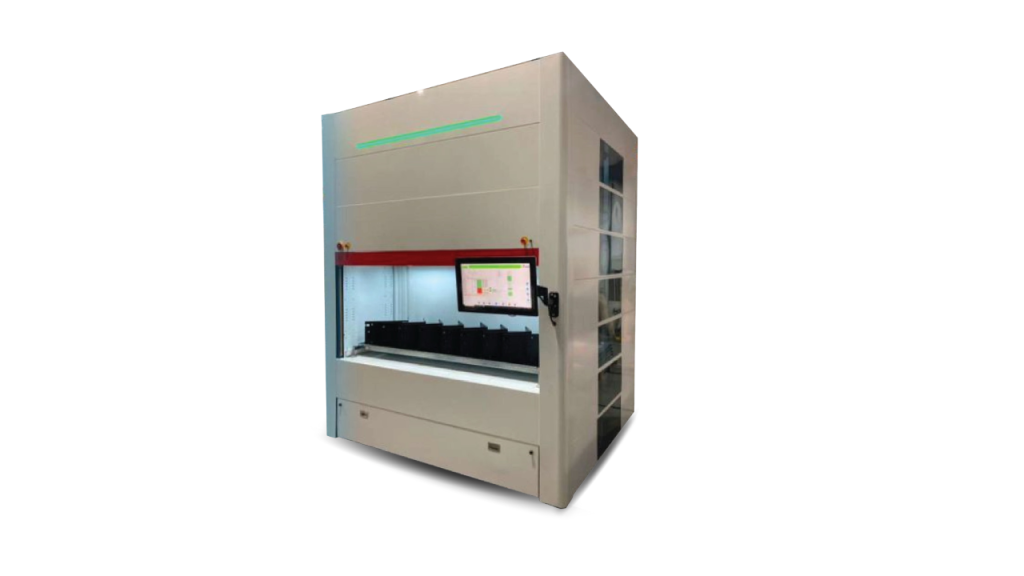
The Vertical Lift Module, or VLM, is a high-tech elevator located between two columns of trays.
This central elevator, known as the extractor, moves up and down to fetch specific trays from the front or back racks. They then bring the tray to the warehouse worker who requested that specific item.
When a tray is returned to the machine, sensors measure the height of the tallest item on that tray. The system then identifies the tightest possible storage location.
This ensures that no vertical space is wasted between trays. Because it moves only one tray at a time, the VLM is highly stable and can handle heavy payloads, often up to 990 kg per tray.
Vertical Carousel Storage
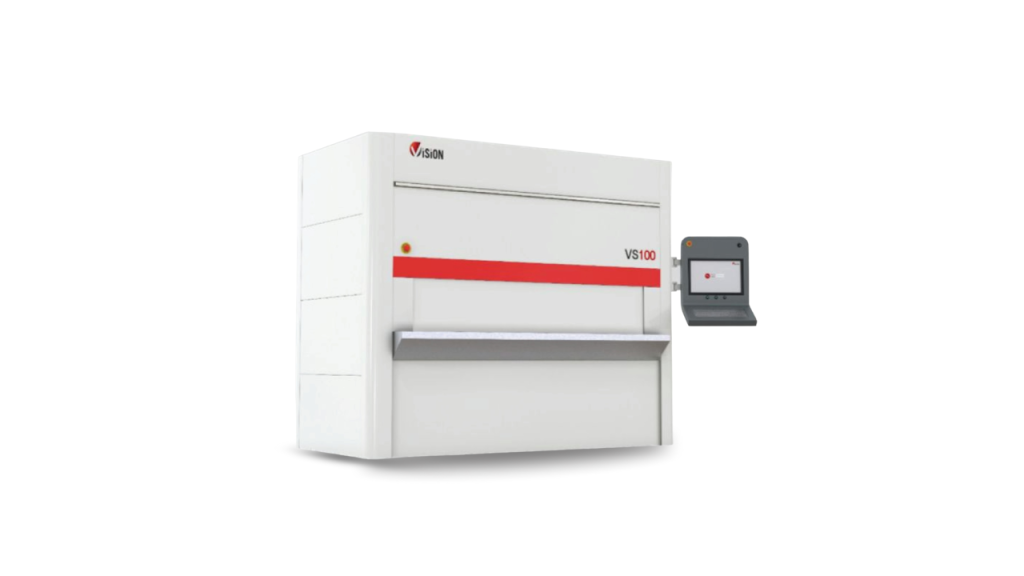
The Vertical Carousel Storage system operates on a different principle. If a VLM is an elevator, a vertical carousel is a Ferris wheel.
In this system, all the shelves are linked together in a continuous loop. To retrieve an item, the entire chain of shelves rotates.
This rotation continues until the requested shelf arrives at the operator’s access window.
However, unlike the VLM, a VCS can’t handle larger items that would require an imbalance of one of the trays. As such, a VCS is well-suited for small- to medium-sized, lightweight items that require frequent picking.
While they do not offer the same item-height sensing capabilities as a VLM, they provide a very compact solution for high-frequency picking environments such as retail backrooms or spare parts counters.
What is a Traditional Storage System?
A traditional storage system is the classic warehouse setup that most people are familiar with. It consists of static shelving, pallet racking, or cupboards arranged in long rows.
If a worker needs an item, they must travel to it. This involves walking down aisles, locating the correct shelf, and using a ladder or forklift to reach items stored high up.
Traditional systems are simple and have a low entry cost. You buy the metal racks, bolt them to the floor, and you are ready to go.
However, they are also highly inefficient. A large portion of a traditional warehouse is actually empty space—specifically, the aisles required for people and machines to move.
Additionally, because the shelves are static, they cannot adapt to changing inventory levels, resulting in unutilised space.
Vertical Lift Module vs. Vertical Carousel Storage vs. Traditional Storage System: How Are They Different?
When we compare these three systems, the differences become clear across several key categories.
Mechanisms
The mechanical operation is the most obvious point of departure.
Traditional storage has no moving parts; it is entirely static. Instead, the retrieval mechanism is entirely external, relying on human effort, ladders, or forklifts to navigate aisles and reach specific heights.
The Vertical Carousel uses a rotating motor to move a chain of shelves. While this allows for rapid retrieval, the linked nature of the shelves means the motor must move the entire inventory weight on every pick, requiring the load to be relatively balanced to avoid mechanical strain.
The Vertical Lift Module uses a sophisticated lift-and-extract mechanism to move individual trays independently. Unlike the carousel, the VLM moves only the requested tray, leaving the rest of the inventory stationary.
Footprint
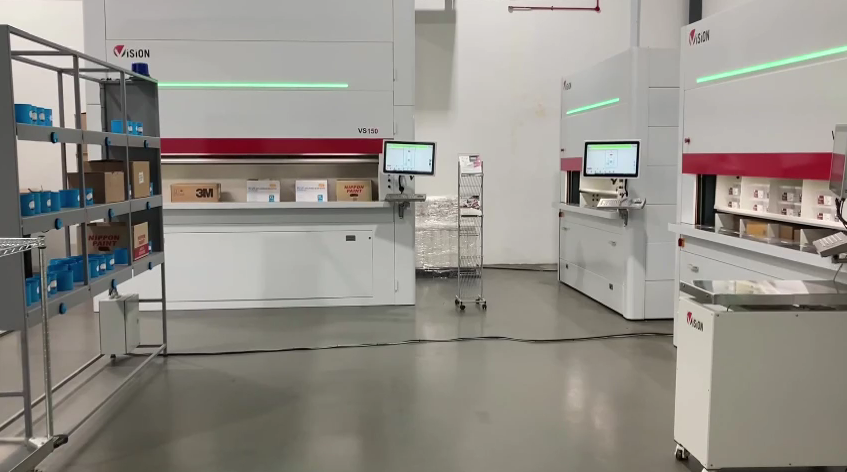
In a traditional warehouse, a huge amount of floor space is wasted on aisles. If you have ten rows of shelving, you likely have nine aisles between them.
An automated vertical system, such as a lift or carousel, eliminates these aisles entirely. All the storage is condensed into one or two units. This allows a business to store the same amount of goods in a smaller footprint, freeing up the rest of the floor for production or other activities.
Because a lift uses an internal elevator to place trays in the smallest possible vertical increment based on the goods’ height, it eliminates unutilised air within the machine.
A carousel, conversely, has fixed shelf heights. If you store a short item on a tall shelf, that vertical gap remains empty and unrecoverable.
Furthermore, while carousels are generally limited to around 7 metres in height due to the mechanical strain of rotating the entire inventory chain, a VLM can be built up to 30 metres tall, allowing a business to store significantly more volume within the same square footage of floor space.
Internet Connectivity
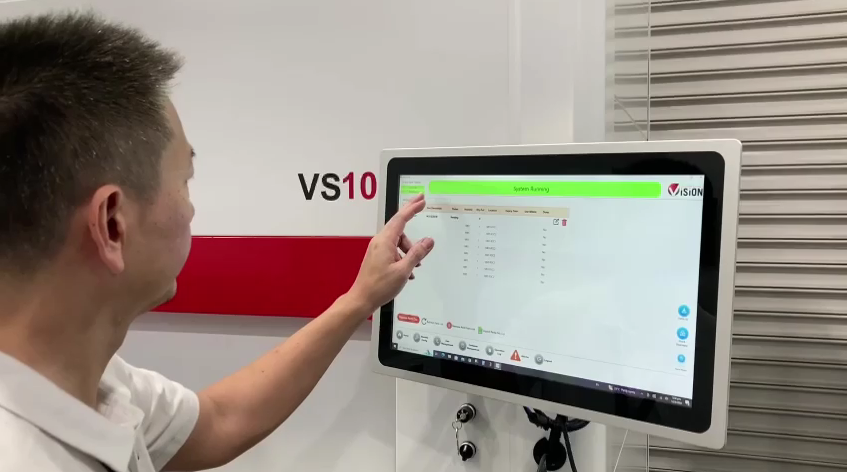
Traditional storage is dark—it has no data. You might have an inventory process for your warehouse staff, but the shelves themselves do not store data about their contents.
In contrast, vertical storage systems are smart. Through IoT connectivity, these machines are linked to a central management platform. Managers can see inventory levels within these automated shelves in real time from a warehouse device.
These storage solutions have consoles attached that allow operators to enter inventory data immediately while storing and retrieving items from the automated racks.
Modularity
Traditional shelves are somewhat modular in that you can add more racks, but they always require more floor space.
Vertical storage systems are modular in height. Many VLMs can be extended upwards if you move to a facility with higher ceilings. Additionally, you can link multiple units to a single software interface, enabling the system to scale with the business.
Workplace Safety
Traditional storage often requires workers to climb ladders and retrieve boxes from higher shelves, which can risk injury.
Vertical storage brings the items to the worker at an ergonomic, waist-high window. This eliminates the need for climbing and bending.
Furthermore, units from Vision One include safety light curtains. If an operator reaches into the window while the machine is moving, the system stops instantly to prevent injury.
Vertical Lift Module vs. Vertical Carousel Storage: Differences Between Two Automated Storage Solutions
While both are automated, choosing between a VLM and a carousel requires a closer look at their technical limits.
Motion
The primary difference between a lift and a carousel is the way they retrieve and store items.
- The VLM moves one tray at a time using a lift.
- The Carousel moves all shelves simultaneously.
This means that in a Carousel, you must ensure the weight is relatively balanced across shelves to avoid placing excessive strain on the motor. In a VLM, weight distribution is not a factor because the trays are stored independently on fixed supports.
Height Capacity
VLMs can be built much taller than Carousels. Because a Carousel must support the full weight of the inventory in a loop, there is a physical limit to how high it can be before the chain becomes too heavy.
VLMs, which operate like elevators, can reach heights of 20 to 30 metres, allowing you to use the full height of a modern industrial unit.
Ideal Load
The VLM is the king of heavy and irregular loads. Its trays are often wider and deeper, and its height-sensing technology allows it to store a tall engine part alongside a flat box of gaskets.
The Carousel is best for uniform inventory. If all your products fit in a standard-sized bin, a Carousel is more ideal.
Who Is Each Storage System Ideal For?
The three storage solutions we’ve outlined each suit a different type of business, based on their industry, the types of goods they handle, and business scale.
Vertical Lift Module
image
The VLM is the perfect choice for heavy industry, manufacturing, and large-scale distribution.
If you handle bulky items, heavy machine parts, or inventory that varies significantly in size, the VLM is your best bet.
It is also the go-to solution for businesses looking to future-proof their storage, as it offers the greatest flexibility for evolving product lines.
Vertical Carousel Storage
Vertical carousels are ideal for the pharmaceutical, electronics, and retail sectors.
These industries often handle thousands of small, lightweight SKUs. If your items are relatively uniform—such as small tool bits, electronic components, or medical supplies—the carousel offers the best picking speed for the investment.
Traditional Storage System
Amid technological advancements in warehousing and storage solutions, traditional storage systems still have a role.
They’re ideal for businesses with very low turnover or for large items that cannot fit in a tray (such as long steel beams).
It is also a temporary solution for startups with very little capital seeking to get started. They’re a good starting point before investing upfront in more robust solutions, such as a VLM or VCS.
How to Get an Automated Storage System
Transitioning to an automated system is a strategic move.
- The first step is to conduct a space and inventory audit. You need to know how much floor space you are currently using and the dimensions of your most common items.
- Next, you’ll need to note your existing warehouse components—both software and hardware infrastructure. You’ll need to determine how your WMS will integrate with the automated storage software.
- The most important step is to contact an automated storage provider. They’ll consult with you, assess your existing warehouse layout and business setup, and recommend automated storage solutions tailored to your needs.
Providers like Vision One offer a comprehensive approach to this transition. They do not just drop a machine in your warehouse. They help with the design, ensuring the system fits your workflow.
They also provide the “OptiFlex” software, which acts as the brain of the operation. This software manages IoT connectivity, enabling the machine to communicate with your existing office systems.
Get a Custom Automated Storage System Today!
The shift from traditional to vertical storage is not just about buying new shelves. It is about strategically transforming your business into a more efficient organisation.
By choosing the right system—whether it is a Vertical Lift Module for heavy-duty needs or a Vertical Carousel for high-speed picking—you are reclaiming your floor space and empowering your workforce. If you’re a warehousing or logistics solution, you’d be providing a better service for your clients.
Contact Vision One today to discover how a custom-built automated storage system can revolutionise your facility.
Frequently Asked Questions
Can a Vertical Lift Module be installed outdoors if my warehouse is completely full?
It’s not advisable to install an automated storage solution outside your facility, as these units contain moving parts and electrical components that won’t perform well in outdoor conditions.
Does the OptiFlex software require a local server, or is it cloud-based?
Vision One’s OptiFlex software is designed for flexibility and can typically be deployed as a local server-based installation or integrated into a cloud environment.
How long does the typical installation and staff training process take?
While a traditional warehouse setup can take weeks to bolt down, a VLM can often be installed in as little as two to four days. Staff training is remarkably fast due to intuitive touchscreen interfaces and visual picking aids (such as lasers or light bars); most operators can become fully proficient within a single shift.
Are there total weight limits for the entire machine, or only for individual trays?
Both limits exist. Vision One’s individual VLM trays can often carry up to 990 kg (approx. 2,200 lbs) each, but the entire machine’s total load capacity can reach up to 80,000 kg.
For carousel types, the trays can carry up to 250 kg, and the machine’s gross payload is rated at up to 2,500 kg.
It is important to work with your provider to ensure the facility floor can support the concentrated weight of a fully loaded vertical module.