
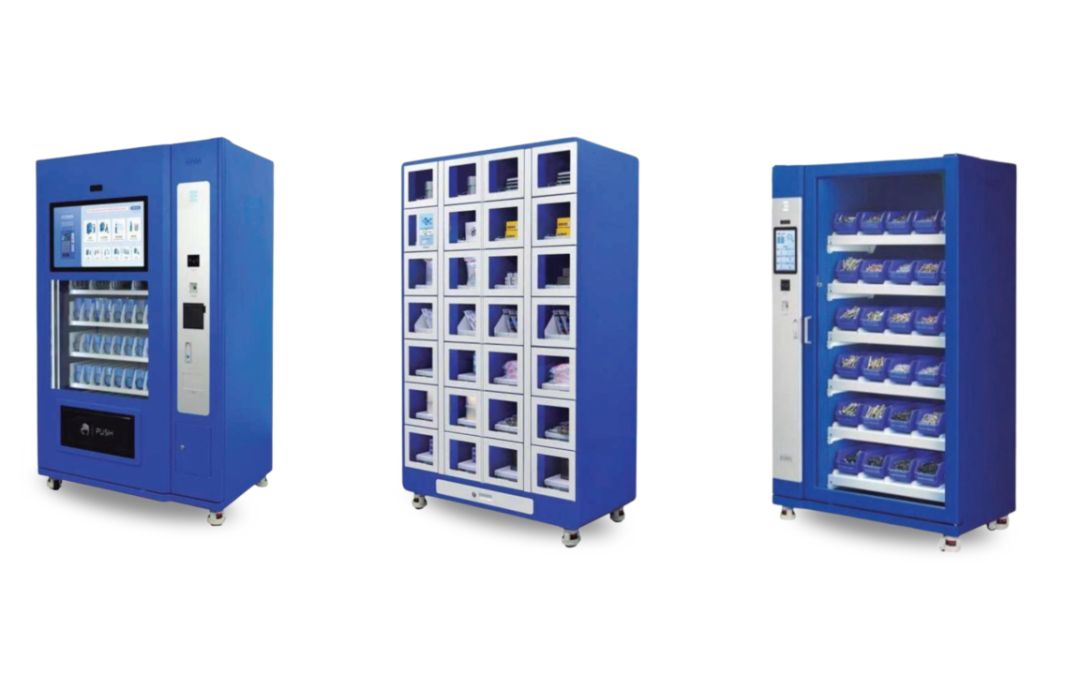
Vending machines have come a long way from the simple mechanisms that supply beverages at the drop of a coin.
Smart vending machines have been around for a while. In addition to dispensing goods, they now track inventory, sales and are equipped with sensors that signal to operators when they need to be replenished. In this guide, we’ll explore how smart vending machines work as well as the key features that set them apart from traditional vending machines.
Key Takeaways
- Smart vending machines are more streamlined and integrated than traditional vending machines, as they can report on inventory and, in many applications, sales.
- Smart vending machines offer real-time inventory tracking, allowing operators to monitor stock levels remotely.
- Data analytics provide insights into sales trends, product popularity, and machine performance, helping operators make informed decisions.
- Integration with inventory management software enables centralised monitoring of multiple machines across locations.
Smart Vending Machines vs Traditional Vending Machines
Traditional vending machines have been around for decades. They are mostly mechanical devices that dispense products after customers insert cash or coins and press a button. They operate offline, with simple keypads or buttons and cannot provide real-time insights into inventory levels. Operators have to visit in person to check stock levels, collect cash, and deal with mechanical issues.
Smart vending machines, on the other hand, are the next step in this evolution. Here are some of their key differentiators from traditional vending machines:
- Payment options: While traditional vending machines accept only cash and coins, smart vending machines support a variety of payment methods, including cards, contactless NFC, and mobile wallets, making it easier for customers to complete a purchase.
- User interface and experience: Traditional machines use physical buttons that allow customers to indicate the items they need. In contrast, smart vending machines often have touchscreens to make transactions more intuitive.
- Connectivity and IoT management: Traditional machines operate offline and need manual checks for stock and issues. Smart vending machines use built-in Internet of Things (IoT) controllers and cloud platforms to send and receive data in real time, so operators can monitor inventory, sales, and machine status remotely.
- Inventory tracking and data analytics: With traditional machines, inventory is checked during visits. Smart vending machines automatically track stock and sales and feed this data into cloud dashboards, helping operators optimise product mix, machine placement, and refill schedules based on actual demand.
- Maintenance and uptime: Problems in traditional machines are usually found only when someone reports them or during inspections. Smart machines, on the other hand, can detect many issues and send alerts, helping operators respond faster and reduce downtime.
Features of a Smart Vending Machine
Now that we’ve seen how smart vending differs from traditional machines, let’s look at the key features that make these capabilities possible.
User Access Methods
Smart vending machines can be configured for open access (any customer) or restricted access (only authorised users). In controlled environments such as workplaces, factories, or hospitals, users can authenticate using an ID or RFID card, a PIN code, biometric login, or a corporate ID. This helps prevent unauthorised use and creates a clear audit trail of who took what and when.
Our Vision IoT machines support multiple access options across different models, including passwords, swipe cards, QR codes, and face recognition for improved security.
Digitised Dispensing
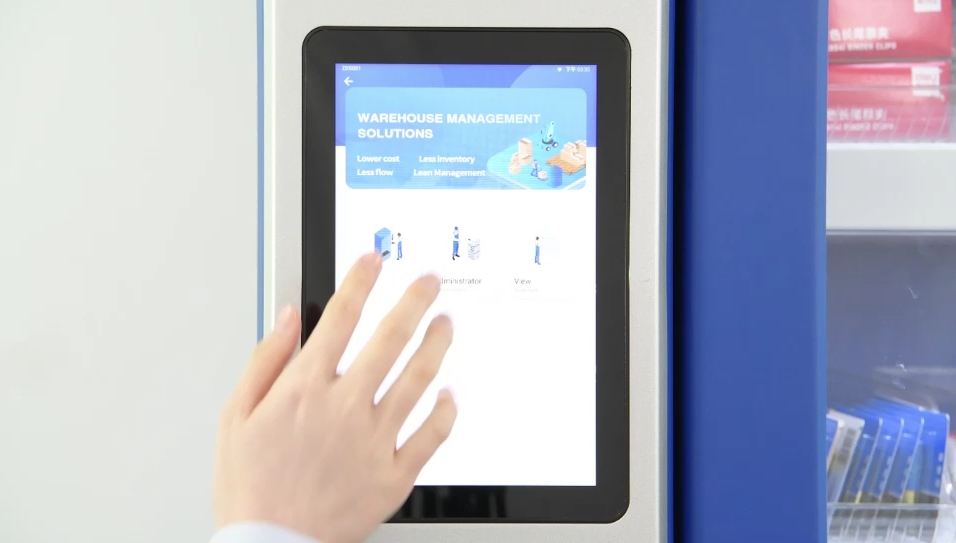
Instead of relying on simple mechanical coils that assume a vend was successful (which sometimes aren’t), smart vending machines use sensors to confirm what has been taken. Depending on the design, this can include optical sensors, RFID readers, or weight sensors built into each shelf or bin.
Vision IoT focuses on high-precision weight sensors in its sensor and locker machines. When an item is removed, even something small and light, the system detects the change in weight and automatically updates inventory and records the transaction. This removes the need to tag individual items, making both dispensing and restocking more efficient.
Real-Time Reporting
Smart vending technology provides operators with real-time data on sales, product popularity, and machine status. Dashboards show which products are moving, which are slow, and when machines were last serviced. This helps businesses plan vending machine stock, update pricing based on demand, and curate promotions rather than relying on guesswork.
Integrated Inventory Tracking
Many smart vending machines integrate with inventory management, warehouse, or ERP software for seamless monitoring. This lets businesses view vending machine stock alongside other sales channels, such as e-commerce and physical stores, rather than managing separate spreadsheets or systems. Operators can see their overall stock, sales, and replenishment needs at a glance.
Payment Gateways
Instead of relying solely on coins or bills, these machines support a range of cashless payment methods, such as credit and debit cards and mobile wallets. Every transaction is automatically logged in the backend dashboard, reducing the need to handle physical cash and helping minimise discrepancies in cash counts. Many smart vending solutions also use secure payment encryption to protect customer payment data.
IoT Connectivity
Smart vending machines rely on IoT: they connect to the internet and communicate with cloud platforms to provide real-time visibility over operations. Common IoT features include remote monitoring, inventory and sales tracking, temperature monitoring (for food and beverage machines), and alerts for technical issues. Instead of manually checking machines one by one, operators can manage hundreds of machines from a single dashboard, improving efficiency and reducing downtime.
Our smart management platform builds on this by offering visualised reports, predictive restocking suggestions, and standard API interfaces to connect with existing business systems.
Types of Smart Vending Machines
Smart vending machines are used across many industries, from food and beverage to office supplies, tools, PPE, and industrial components. They are not one single machine design, but an umbrella term for different machine formats that all use sensors, software, and connectivity to manage inventory automatically.
Below are some common types.
Weight Sensor Machine
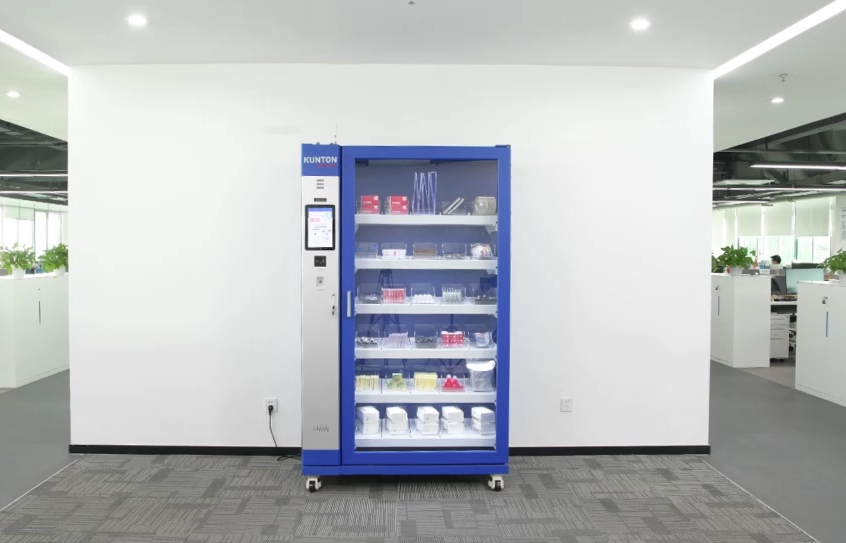
A weight-sensor-based machine uses load cells or weight sensors inside each shelf or compartment to detect when items are added or removed. This lets the machine track inventory changes in real time without needing RFID tags on individual products, which simplifies restocking and suits small, fast-moving items.
Our sensor vending machines (such as the Sensor machine-30) use high-precision sensors for “non-inductive” picking: as soon as an item is taken, the system records the weight change, updates stock, and logs the transaction.
Locker Type Vending Machine
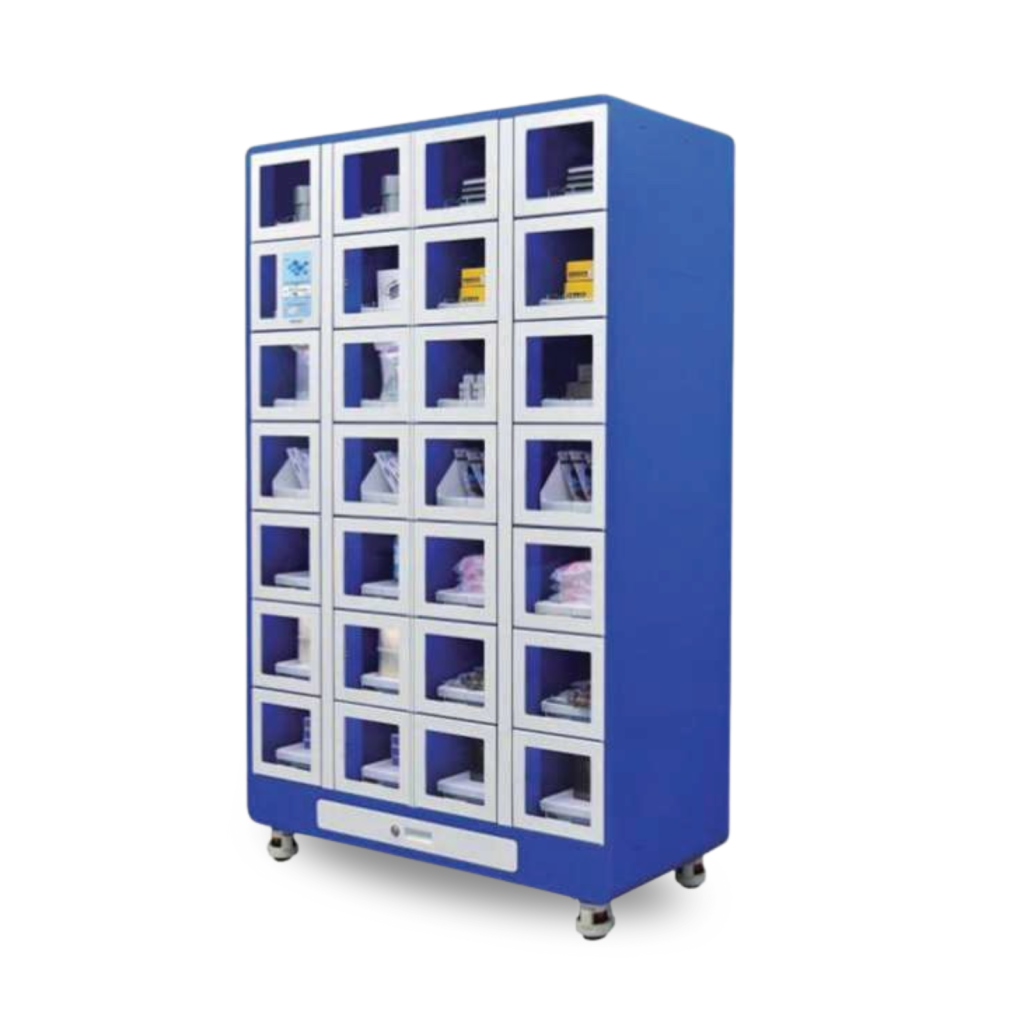
Locker-type vending machines use electronically locked compartments (instead of a key) to secure items. Products are stored in individual “lockers” and are dispensed only after an authorised user unlocks the correct door. This format is ideal for high-value, bulky, or safety-critical items such as PPE, tools, or specialised components.
At Vision IoT, we offer both standard locker machines and sensor locker machines (with built-in weighing for up to 5 g accuracy, so each compartment can automatically report stock levels and usage). Our locker series provides individually locked compartments, with multiple authentication methods (such as face recognition, card, or QR code).
Spiral/ Coil Dispensing Vending Machine
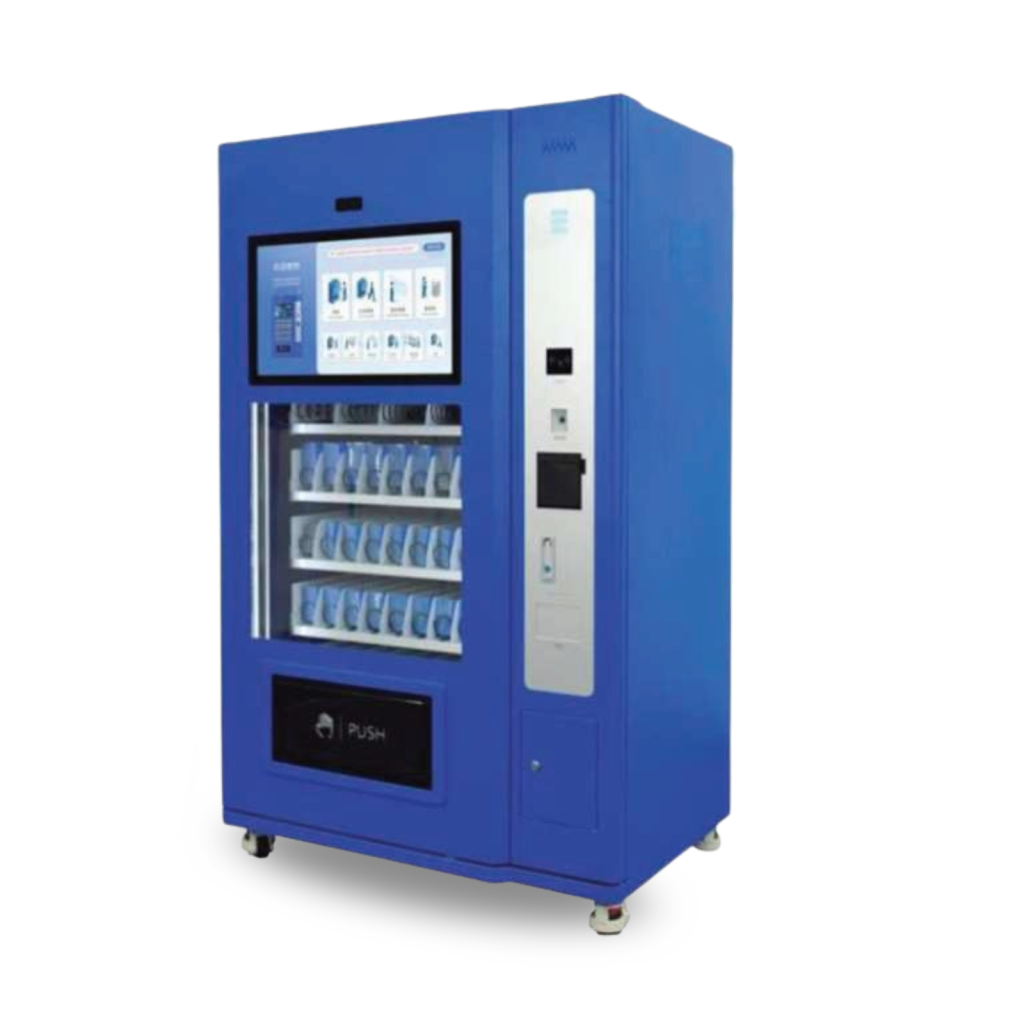
Spiral, or coil, vending machines use rotating coils to push products forward one at a time and are commonly used for snacks, small boxes, and packaged items. In “smart” configurations, they combine this proven mechanical design with digital interfaces, cashless payments, and IoT connectivity.
Our coil vending machines are equipped with large touchscreens and support multiple access and payment methods (face recognition, swipe card, app/mini-program, QR code, password). Furthermore, integrated IoT functions enable operators to monitor inventory and machine status remotely, eliminating the need to manually check each machine.
Smart shelves with RFID cabinets
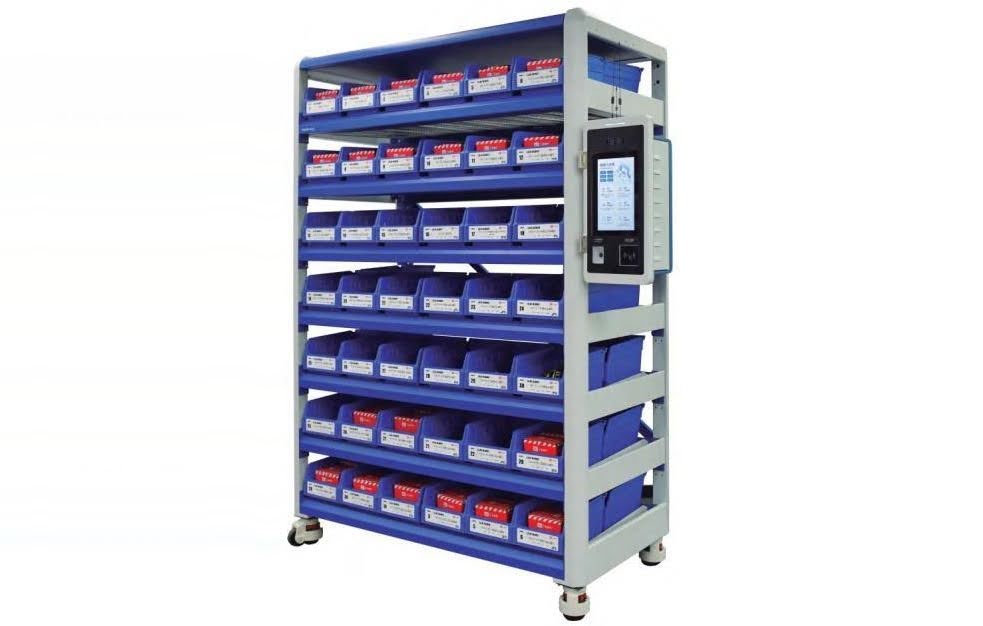
Smart shelves use open shelving combined with RFID technology to track what’s on each shelf. They are useful where fast, “grab-and-go” access is needed, such as for frequently used consumables or shared tools.
Our Smart Shelf-RFID-M42 combines an open access design with RFID tracking and two-bin FIFO channels, enabling accurate inventory tracking as busy workers take items from each shelf. Because of its open design, replenishing is as easy as restocking shelves.
Get a Smart Vending Machine for your Business Today!
Smart vending machines offer convenience for consumers and operational efficiency for businesses. Here at Vision IoT, we offer a range of smart vending machines to suit budgets—from coil-based models to more advanced models equipped with weight sensors.
Each of our vending machines provides insights through data analytics, helping businesses track inventory and sales. Whether for office supplies, tools, PPE, or industrial components, our vending machines help operators effortlessly manage and secure their supplies.
Get in touch with Vision IoT today and ensure honest transactions through smart vending machines. These machines represent the future of automated retail and workplace efficiency.
Frequently Asked Questions (FAQs)
How does a smart vending machine work?
A smart vending machine uses onboard controllers, sensors (such as weight sensors or RFID), and cloud connectivity to monitor inventory, process payments, and report machine status in real time. Operators can remotely manage stock, update product offerings, and track sales trends from a central dashboard.
What sets smart vending machines apart from traditional vending machines?
Unlike traditional vending machines, smart vending machines provide remote monitoring, multiple payment methods, real-time inventory tracking, and data analytics. They help reduce downtime due to mechanical failures, lost sales, and transaction costs while improving the customer experience.
Can smart vending machines handle fresh products?
Yes. Some smart vending machines are designed for fresh food, beverages, and shelf-stable items. They monitor temperature, food safety, and expiry dates to help maintain product quality.
Are smart vending machines suitable for offices or workplaces?
Absolutely. Office and stationery vending machines, as well as food and beverage machines, are ideal for workplaces. They allow controlled access, track inventory by user or department, and reduce the time spent on manual restocking.
Can operators manage multiple machines across different locations?
Yes. Smart vending solutions can be monitored and controlled from a single platform. Operators can remotely track inventory levels, machine status, and sales trends for all machines, even when they are spread across multiple sites.